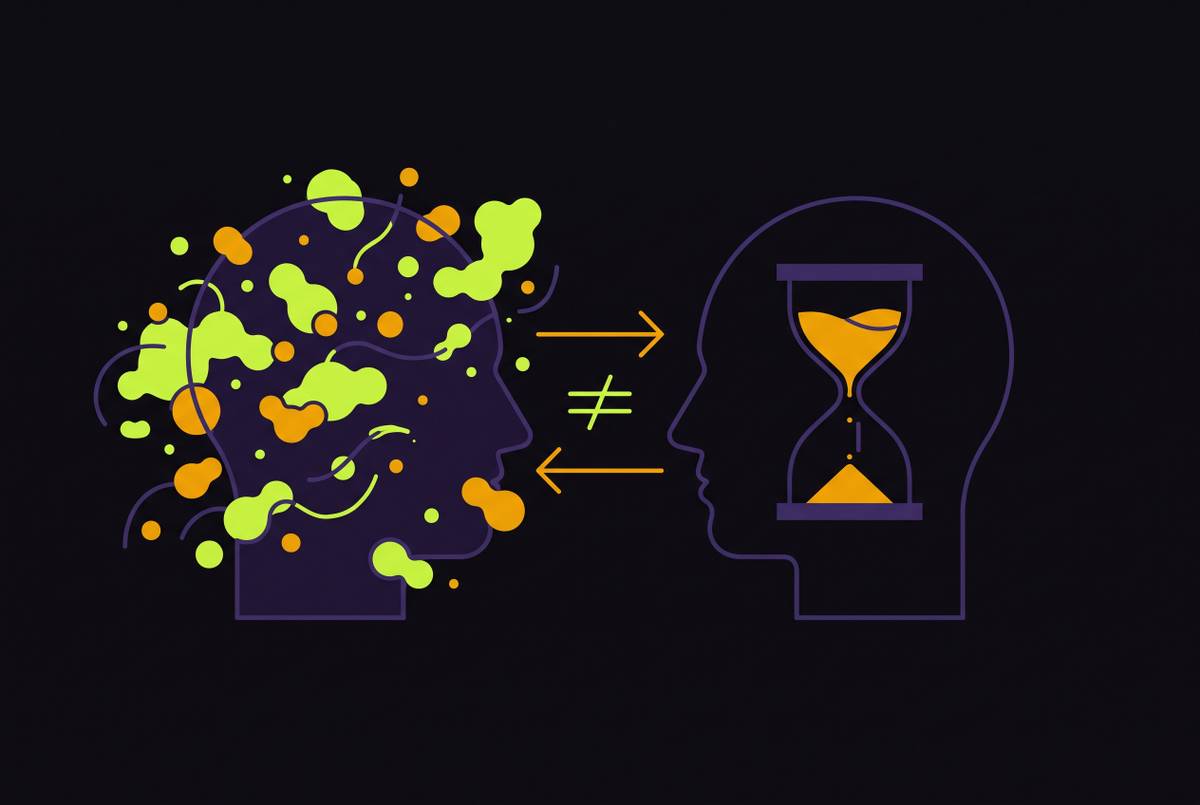
The Cumulative Allergic Load That Overwhelms Your Brain Before Doctors Notice Anything Wrong
Persistent brain fog and fatigue from allergies often go undiagnosed until damage compounds.

Undiagnosed allergies can contribute to brain fog, fatigue, and poor sleep when repeated exposure, inflammation, and disrupted rest reinforce one another. Diagnosis depends on connecting symptoms with exposures and considering other causes. The key is the combined burden, although impaired concentration does not by itself establish permanent brain damage.
Why allergy-driven cognitive decline goes undiagnosed until real damage is done
Feeling persistently wrong while routine bloodwork comes back normal can be deeply frustrating. Concentration slips, everyday tasks feel harder, and a full night in bed does little to help. Yet mild congestion, middling fatigue, and occasional brain fog may each look unremarkable in isolation. The difficulty lies in connecting them over time. A visit to a clinician shows how someone is doing that day, but the pattern may take months to unfold.
That mismatch helps explain why an allergic contribution can remain unrecognized without implying that clinicians ignore symptoms. Fatigue from allergies can look like mild depression, chronic fatigue syndrome, or thyroid imbalance. Without obvious nasal symptoms, those possibilities may reasonably receive attention first. Seasonal fluctuations further complicate the picture because an appointment during a better week may not reflect the preceding stretch of poor function.
What if healthier habits do not restore energy? Persistent exposure offers one possible explanation, rather than proof that lifestyle changes have failed or that allergies must be the cause. Indoor inflammation can continue while outdoor exposure rises and falls, leaving the person with no clear starting point to report. Calling this “damage” requires caution because difficulty thinking clearly is not equivalent to demonstrated brain injury.
How the immune system's first response reaches the brain
The biological chain begins when an allergen triggers an immune response in a sensitized person. IgE antibodies participate in activating mast cells, which release histamine and other inflammatory signals through a process called degranulation. These signals do not remain relevant only to the nose or eyes. Some can influence communication between the body and brain.
The route needs a careful distinction. Histamine released outside the brain does not cross a healthy blood-brain barrier. Cytokines, including interleukin-1β and tumor necrosis factor-α, can influence the brain through transport across that barrier or signaling at it, particularly under inflammatory conditions. That provides a route for peripheral inflammation to affect neural communication without suggesting that every substance released during an allergy attack enters brain tissue.
Histamine also has a separate job inside the brain. There, it acts as a neurotransmitter involved in alertness and sleep regulation. H1 receptors help mediate its wakefulness effects, while H3 receptors help regulate neurotransmitter release, including dopamine, norepinephrine, and acetylcholine. These receptors serve as control points in brain signaling. Disturbance across inflammatory and sleep-related pathways can help explain reduced concentration, mental fatigue, slower information processing, memory lapses, and the familiar cloudy feeling.
How histamine and cytokines accumulate across multiple allergen sources simultaneously
For a person sensitive to several allergens, dust mites in bedding, pet dander in carpets and upholstery, and mold in damp rooms can create overlapping indoor exposures. Those sources can still be there when pollen season begins. Exposure outdoors adds to what the person already faces indoors.
Tree pollen peaks in early spring, grass pollen rises in late spring and summer, and ragweed dominates late summer and fall. The sequence can extend the period during which a sensitized person experiences additional symptoms. Exposure also changes within a day. Warmer, sunnier conditions lift pollen higher, while cooling air can bring certain types, especially ragweed, back toward face level. Many pollen types nevertheless have their highest concentrations during daytime afternoon hours, so nighttime worsening has no single explanation.
The central idea is that “no single source is large enough to explain the symptoms” may describe the person's experience. Each exposure can contribute without producing a dramatic reaction of its own. But accumulation should not be understood as histamine and cytokines simply collecting without clearance. It is repeated or sustained signaling, with overlapping exposures leaving fewer opportunities for symptoms and sleep to settle.
What chronic immune activation costs the brain in oxygen and metabolic resources
Repeated immune activation has an energy cost even when its target is an allergen. Maintaining that response requires metabolic resources, which can contribute to a drained feeling that differs from ordinary sleepiness. Some people experience heaviness or reduced motivation instead.
Congestion adds a separate burden by making nasal breathing difficult, especially during sleep. Swollen nasal passages encourage mouth breathing, which bypasses the nose's filtration and humidification. The brain depends heavily on a steady oxygen supply, but this does not mean a stuffy nose necessarily starves it of oxygen. Nasal obstruction alone is not evidence of clinical hypoxia. The more grounded connection is that persistent congestion can disturb breathing and sleep, with consequences for next-day function.
Duration changes the experience of that burden. A short bout may lower energy for a while, but obstruction that keeps coming back can keep getting in the way of recovery. Inflammatory signaling, the body's need for energy, and sleep disrupted by breathing problems can therefore all be at work at the same time. They should not, however, be treated as proof that metabolic fuel is literally being diverted away from the brain in every affected person. The combined strain is a useful explanation to investigate.
How disrupted sleep converts daytime inflammation into a compounding overnight deficit
Sleep is the point where today's symptoms can become tomorrow's disadvantage. It supports memory consolidation and the clearance of inflammatory byproducts, so repeated disruption reduces the opportunity for cognitive recovery. Hours in bed are not the whole story. A person may allow enough time for sleep yet wake without feeling restored because that sleep was fragmented.
Allergic congestion can worsen at night as pollen brought indoors on clothing and hair reaches bedding and the face. Lying down can also increase nasal tissue swelling. Together, these effects can restrict nasal airflow, promote mouth breathing, and cause awakenings that interrupt restorative sleep. Disruption of deep sleep adds to the difficulty because this stage supports recovery and memory.
Mouth breathing can also promote snoring through vibration around the soft palate and uvula. More persistent obstruction may be associated with sleep-disordered breathing and increased sleep apnea risk during high-pollen periods. In children, chronic allergic rhinitis can contribute to enlarged adenoids and tonsils, allowing airway obstruction to outlast an individual season. These are possible complications of congestion.
The feedback loop is the crucial connection. Poor sleep can make the body more sensitive to inflammation the next day, while continued exposure brings another night of symptoms. Daytime inflammation disrupts overnight recovery, and inadequate recovery can intensify the response to the next day's load.
Where mood and psychiatric symptoms enter the accumulation — and why they are mistaken for primary conditions
Inflammatory signaling can affect more than thinking speed. Cytokines can change neurotransmitter synthesis and how nerve cells communicate, which links immune activity to the systems that shape mood. Poor sleep can also make it harder to cope with emotions. Depression or anxiety symptoms may therefore be part of the experience of allergic illness.
That overlap creates another diagnostic ambiguity. Low mood that lasts, less motivation, and concentration problems need to be assessed even when the person also has mild congestion. An allergic contribution may be missed if the symptoms are considered only through a psychiatric lens. The reverse is just as important, however. The presence of allergies does not establish that depression or anxiety is secondary to inflammation, and the conditions can coexist.
Medication can further complicate interpretation of the pattern. First-generation antihistamines such as diphenhydramine cross the blood-brain barrier and can impair alertness, attention, memory, executive function, reaction time, and vigilance. They are allergy medicines. Their effects can resemble or deepen the symptoms being investigated.
Montelukast presents a different concern. The FDA requires a boxed warning for serious neuropsychiatric effects, and ICAR 2023 guidelines reserve it for patients who do not respond to alternatives. Treatment history therefore belongs in the explanation of symptoms.
Why the brain reaches measurable impairment before any single symptom becomes clinically obvious
Several modest disruptions can converge on the same cognitive task. Inflammatory signaling may affect neural communication while lost sleep leaves less time to recover and a sedating medicine slows things further. No one contributor has to feel overwhelming. The combined effect can become apparent in daily performance before its cause becomes clear at an appointment.
The affected functions are more specific than “feeling tired.” Processing speed is how quickly a person can handle information, while working memory helps them hold it in mind as they do a task. Attention regulation helps a person stay focused, and executive function helps them plan and make decisions. Multitasking uses several of these abilities at the same time. A person may notice routine work becoming effortful without knowing which part of the process has changed.
Seasonal improvement can help reveal the connection, but it can also obscure it. Getting somewhat better when exposure falls may make earlier struggles seem less serious, even though losing one layer of exposure could explain the change. People with indoor sensitivities may have no such change to compare. Neither pattern alone establishes measurable cognitive impairment or permanent damage, and the supplied evidence does not define a clinical threshold for “cumulative allergic load.”
Recording cognitive symptoms against environmental changes, dietary patterns, and specific locations can reveal relationships that a single clinical snapshot misses.
How to recognize cumulative allergic load in your own symptom pattern before seeking clinical care
To identify that pattern, begin by recording relationships. Note whether concentration difficulty lasts for days or weeks, whether recall seems slower, and whether everyday tasks take more effort than usual. Include irritability or low mood when it accompanies those changes. Tracking when symptoms cluster is more useful than counting symptoms.
Morning grogginess despite adequate time in bed may become more informative when it repeatedly follows nights of congestion. Symptoms that worsen in the bedroom, in an office with poor ventilation, or after pet exposure provide different clues from symptoms that improve during travel. These comparisons make the pattern more concrete without proving the trigger.
Season and weather can add context. Predictable worsening during pollen peaks suggests a different exposure pattern from year-round bedroom symptoms, while rainfall or dry, windy days may coincide with mold or pollen exposure. Record physical symptoms too, including congestion, sneezing, itchy eyes, and post-nasal drip. Cognitive symptoms occurring with these signs make an allergic contribution more plausible, but do not exclude thyroid imbalance, depression, chronic fatigue syndrome, or a sleep disorder.
The next step is clinical interpretation of that record. Exposure-linked brain fog or fatigue that persists despite adequate sleep can justify allergy evaluation. Blood IgE testing can identify sensitization to environmental allergens, but a positive result needs to fit the symptom history before it is treated as the explanation.
Why early testing and immunotherapy address the load rather than adding to it
Testing becomes useful when it connects a suspected exposure with a clinically relevant allergy. At-home finger-prick blood testing can map IgE sensitization across environmental allergens, including pollens, dust mites, pet dander, and mold. It does not diagnose the cause of brain fog by itself. Its role is to inform a treatment plan through interpretation of results together with symptoms and exposure history.
Treatment also requires a distinction between controlling symptoms and changing allergen responsiveness. Antihistamines and nasal sprays can relieve symptoms, and reducing congestion may help interrupt sleep-related strain. It would be too broad to say that they leave every inflammatory pathway untouched or always add to the burden. Allergen immunotherapy has a different aim, which is to modify the immune response to the relevant allergen over time.
Sublingual immunotherapy delivers allergen exposure under the tongue to build tolerance. A 2026 retrospective longitudinal cohort study in Frontiers in Allergy examined telemedicine-based treatment and found clinically meaningful symptom improvement rising from roughly a quarter of patients at 12 months to 45% at 24 months, with medication use declining. Those findings show that symptoms improved, but they do not prove that treatment reverses cognitive injury.
Clinical trial evidence presented at the 2026 AAAAI annual meeting in Philadelphia also addressed durability. Patients completing three years of grass pollen sublingual tablets maintained symptom improvement for at least two additional years after stopping. That result holds for the treatment studied and cannot be assumed to hold for every personalized sublingual plan. For people with confirmed, relevant allergies, early evaluation creates an opportunity to reduce repeated symptoms and sleep disruption instead of waiting through another unexplained season.