Dust Mite Allergy and Sleep Quality
Millions of dust mites in your mattress may be quietly destroying your sleep.
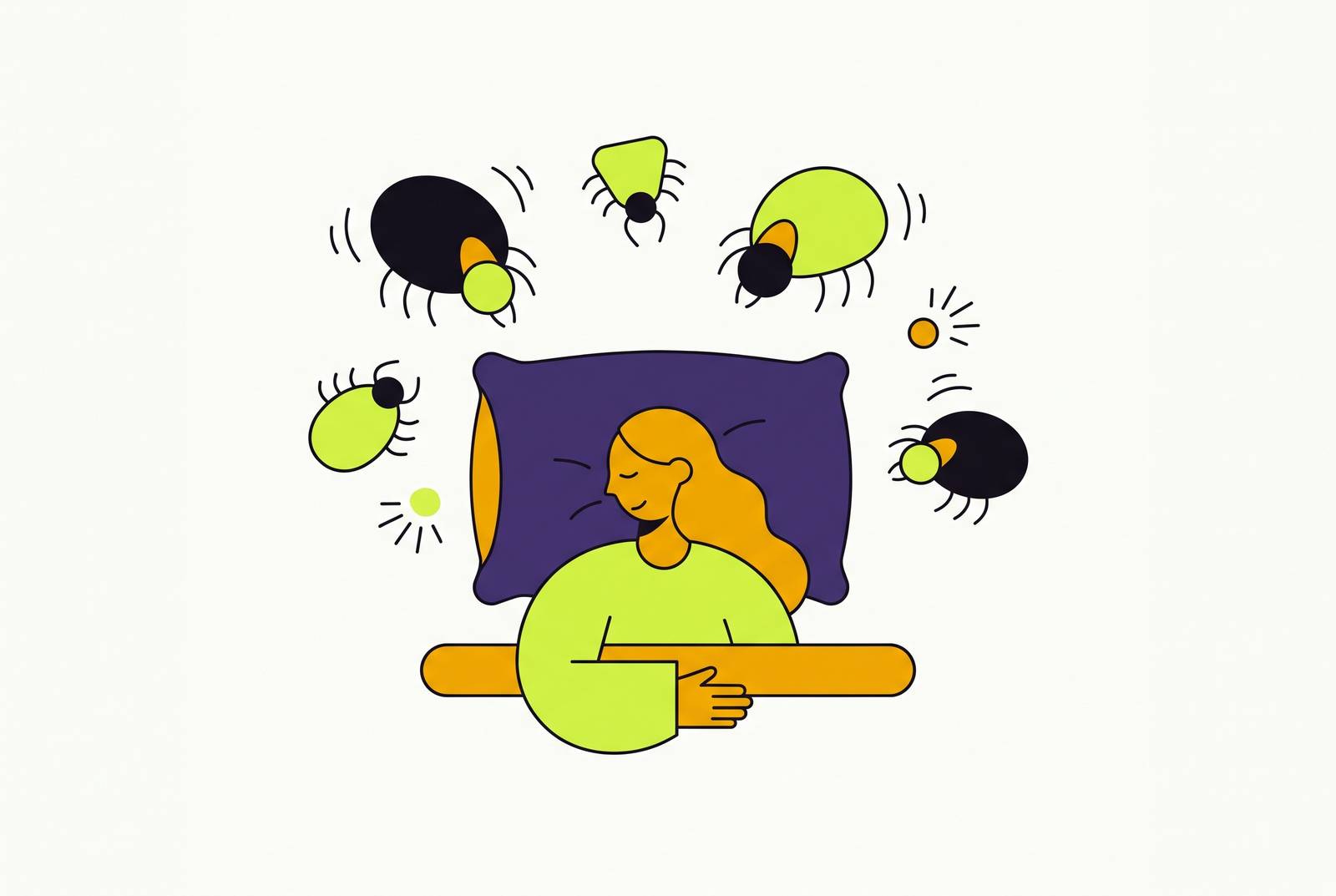
Dust mites don't wander randomly around a house. They set up shop exactly where people spend the most unconscious hours, on the mattress, the pillow, the folds of a comforter, and in the few inches of air a sleeper breathes all night long. A standard mattress can host up to 2 million of them, and over a roughly two-month lifespan, a single mite produces fecal matter totaling something like 200 times its own body weight. That's the allergen load sitting under a sleeping head, night after night, in most homes where mites turn up.
The exposure is built into the walls and bedding of a home, concentrated in the one place nobody can just avoid: the bed. It's built into the walls and bedding of a home, concentrated in the one place nobody can just avoid: the bed. Older homes, humid bedrooms, and heating systems that skip forced air all push mite populations higher, and those are exactly the conditions many households can't renovate their way out of. Research using NHANES data found that people who sleep 7 or more hours a night spend at least 30% of every 24-hour cycle inside that mattress-and-bedding microenvironment. That's a third of a life spent breathing the same reservoir of allergen, every single night.
Airway changes when a dust mite allergic person lies down to sleep
Dust mite allergens are proteins in the mite's feces, its shed skin, and its secretions. They're light enough to go airborne the moment bedding gets disturbed, which happens the second someone crawls into bed and starts shifting around. In a sensitized person, those proteins hit the airway lining and set off an IgE-mediated immune response. Histamine and other inflammatory chemicals get released, and the upper airway does what it always does when that signal fires: the mucosal tissue swells.
Swollen nasal tissue means narrower airways, and narrower airways mean more resistance to airflow. Breathing shifts from the nose to the mouth, snoring becomes more likely, and the conditions for sleep-disordered breathing start stacking up. Mayo Clinic notes that dust mite allergy symptoms tend to get worse specifically during sleep and during cleaning, the two activities most likely to stir allergens into the air. That's cause and effect, not coincidence.
Most people misread their own sleep study. A 2024 review in Otolaryngologic Clinics of North America found that when allergic rhinitis patients undergo standard polysomnography, the apnea-hypopnea index often comes back normal, and the overall respiratory disturbance index looks normal too. But REM-specific respiratory disturbance, measured on its own, can run elevated, and the screening tools built to catch classic sleep apnea miss it. So a person can have a real, measurable breathing disruption during the sleep stage responsible for memory and emotional processing, and still walk away with a clean report and a doctor telling them their sleep is fine.
Nasal obstruction fragmenting sleep without the sleeper knowing it
A person can log eight hours in bed and still wake up exhausted. Time in bed isn't the same as time in deep sleep, and that gap is where dust mite allergy does most of its quiet damage. Swollen nasal passages cause micro-arousals, brief interruptions too short to remember but frequent enough to keep the brain from settling into its deep, restorative stages. The sleeper has no idea any of it happened. They just wake up tired and blame something else: a bad mattress, too much screen time, getting older.
Mouth breathing is the body's workaround when the nose won't cooperate, and it drags its own set of problems along with it, disrupting REM and slow-wave sleep through more frequent arousals and noisier breathing. An umbrella review covering research through August 2024 found something close to circular: mouth breathing helps cause and worsen obstructive sleep apnea, while OSA itself tends to keep the mouth-breathing habit going. One feeds the other, and the loop doesn't break on its own.
In children, the stakes climb higher. Cleveland Clinic notes that chronic mouth breathing can change the shape of a child's face over time and can affect behavior. The facial pattern doctors have documented includes a longer face, a narrower upper jaw, and a receding chin. That's what years of breathing through the wrong opening look like on a growing skull, because the nose stayed blocked long enough for bone and cartilage to grow around the workaround.
One observational study found a fairly linear relationship: the more severe and more persistent a person's allergic rhinitis, the more likely they were to struggle falling asleep and to wake up during the night. Worse allergy, worse sleep. And the numbers on who actually goes looking for help are striking. Among dust mite allergic individuals in that study, more than 70% of adults and 65% of children had consulted a physician specifically about sleep problems, with poor overall sleep quality, snoring, nighttime awakenings, and trouble falling asleep topping the list of complaints.
The daytime cost: brain fog, productivity loss, and the allergy-fatigue cycle
Two separate mechanisms team up here, and they compound rather than simply add. Ongoing allergen exposure keeps the immune system in a low simmer of inflammation, and histamine along with other inflammatory chemicals cross into the central nervous system. That's the physiological root of what sufferers call brain fog. Layered on top of that, fragmented sleep the person doesn't even remember being interrupted leaves the brain coming up short on the restorative stages it needs. Sluggishness and poor concentration follow the next day almost automatically.
Most people living through this don't think of themselves as allergy sufferers. They just feel tired, unfocused, and generally off, and they blame stress, or bad sleep habits, or getting older. Teenagers get hit with a sharper version of the same problem: allergic rhinitis has been linked to worse exam performance, and the sedating antihistamines a lot of teens take to manage symptoms can make the grogginess worse instead of better. The root cause is often sitting in the mattress a few feet below where they slept the night before, and nobody's looking there.
What the research shows
More than half of allergic individuals living in dust-mite-rich environments are sensitized to HDM specifically. Estimates put the number of people affected globally somewhere between 65 million and 130 million, and in industrialized countries like Germany, roughly 1 in 4 people deal with it. In industrialized countries like Germany, roughly 1 in 4 people deal with it, a chunk of the population walking around with an allergy nobody's told them to check for. That's a chunk of the population walking around with an allergy nobody's told them to check for.
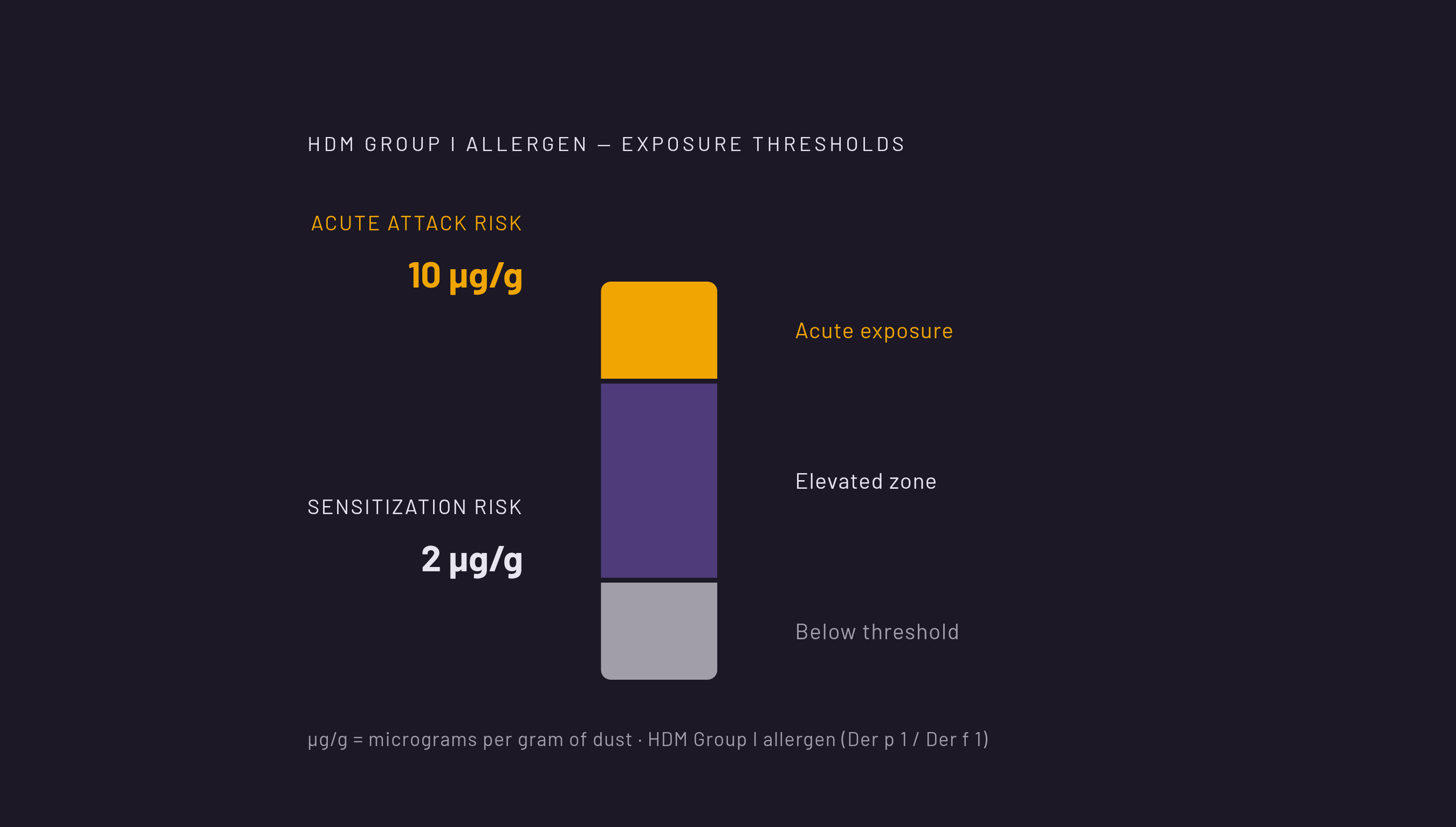
Sensitization tracks with exposure level, and the thresholds aren't fuzzy. A public health organization has set specific markers for risk: 2 micrograms per milliliter of Group I HDM allergen for asthma risk, and 10 micrograms per milliliter for risk of acute asthma attacks. Keep exposure above those lines long enough, and disease risk climbs with it. This isn't a maybe.
Almost nobody walks into a doctor's office saying "I think I have a dust mite allergy."" They show up talking about poor sleep, fatigue, or congestion that won't quit, because almost none of them ever get tested to find out what's actually driving it. So the symptoms get managed piecemeal, one complaint at a time, while the actual driver stays invisible. Lower-income households, older housing stock, and high-humidity bedrooms all carry higher exposure risk, and those tend to be the same populations least likely to have gotten a proper allergy workup.
Then there's the lack of seasonality. HDM allergy runs all year. There's no springtime pollen count spiking on the evening news to prompt someone to wonder if allergies are behind their symptoms. No seasonal marker means no obvious cue, so sufferers just assume their chronic congestion and bad sleep are baseline, the way things have always been for them.
Why symptom-masking approaches fall short for a bedroom allergen
Antihistamines and nasal sprays treat the downstream inflammation. They do nothing to the sensitized immune system that produces it. The nightly exposure keeps happening and the immune activation keeps firing, medication or not. The trigger sits in the bed every night, and a treatment that only quiets the alarm without touching the trigger doesn't resolve anything. It just repeats, year after year, and the person keeps refilling the same prescription wondering why it never quite works.
Sedating antihistamines add their own complication. They might dull a person's conscious awareness of symptoms, but research links them to worse academic and cognitive performance in adolescents specifically. Quieting the itch and the sneeze doesn't restore the deep sleep stages that inflammation and micro-arousals were blocking.
Environmental controls, mattress and pillow encasements, dehumidifiers, washing bedding on a strict schedule, all help cut exposure. They don't eliminate it in homes where mites are already established, and they do nothing to retrain the immune response. Because HDM allergy never takes a season off, there's no natural break where the immune system gets to reset. So what's left, if reducing exposure and taking the pills isn't enough? The authors behind the MT-12 trial commentary, published in Lancet Regional Health – Europe in December 2024, wrote that allergic rhinitis and rhinoconjunctivitis from HDM exposure significantly burden children's daily lives even when allergen reduction and standard drug therapy are both already in place. For a lot of kids and adults alike, doing everything right on the symptom-management side still doesn't get anywhere close to solving the problem.
What sublingual immunotherapy does differently at the immune level
Most allergy treatment on the market suppresses symptoms. Allergen immunotherapy is the outlier, the one intervention in the clinical literature that changes the actual course of allergic disease by pushing the immune system toward genuine tolerance instead of just muting its output. Sublingual immunotherapy, or SLIT, does this by using a part of the body that's naturally built for tolerance: the oral mucosa. Langerhans cells and dendritic cells living in oral tissue, the tonsils, and nearby lymph nodes favor calming, regulatory immune responses over the inflammatory pathway that drives allergic reactions.
Bloodwork over the course of treatment shows the shift in a fairly recognizable pattern. Allergen-specific IgE, the antibody responsible for triggering allergic reactions, shifts over the course of treatment. Allergen-specific IgG4, often called a blocking antibody, climbs and starts interfering with the allergic response, which reduces the immune activation responsible for releasing histamine. Research also suggests SLIT may offer more localized protection right at the respiratory surfaces where allergens first make contact.
None of this is symptom suppression. It's immune re-education: retraining the body to stop treating a harmless dust mite protein like a threat worth a full inflammatory response. And because SLIT goes under the tongue instead of into a needle, it can be done at home daily, without weekly clinic visits, and it carries a lower risk of anaphylaxis than subcutaneous immunotherapy delivered by injection.
What the clinical evidence shows for HDM-specific SLIT

A systematic review out of Copenhagen University Hospital, published in Current Therapeutic Research, pulled together 15 studies on the HDM SLIT tablet in patients with HDM-driven asthma. The results lean strongly positive: 13 of 15 studies found significant improvement in asthma symptoms, 6 of 10 studies measuring lung function found significant gains, and 6 of 8 studies tracking medication use found patients were able to meaningfully cut their daily inhaled corticosteroid dose, in some cases by more than 300 micrograms a day.
The largest pediatric trial to date, MT-12, published in Lancet Regional Health – Europe in December 2024, randomized 1,460 children ages 5 to 11 across 95 sites in Europe and North America, comparing the HDM SLIT tablet against placebo. The primary measure, a Total Combined Rhinitis Score tracked over the trial's final 8 weeks, showed a 22% reduction with the SLIT tablet versus placebo (an absolute difference of 1.0, 95% confidence interval 0.5 to 1.4). That improvement held across symptom severity, medication use, and quality of life, with relative reductions topping 22% in every rhinitis-related category measured. Safety numbers were reassuring: systemic allergic reactions occurred in just 0.41% of the SLIT group versus 0.27% on placebo, with no severe anaphylaxis recorded in the trial.
Longer-term data backs this up. A study published in JACI: Global followed 140 patients with HDM-sensitized asthma and allergic rhinitis over 5 years, splitting them between drug therapy alone and drug therapy combined with SLIT. The SLIT group held onto its benefits across the full 5 years, with improvements in lung function and symptom control, and a slower march toward the airway inflammation and structural remodeling that untreated allergic asthma tends to produce over time. Between the Copenhagen review, the MT-12 pediatric data, and this 5-year follow-up, the evidence base now stretches across adults, teenagers, and young children, closing a gap that MT-12 was specifically designed to address.
None of this matters much if the treatment stays locked behind weekly in-person visits that most working adults and busy parents can't fit into a schedule. That's the real bottleneck, not the science. Telehealth allergy care has started to change the math: board-certified allergists can run a virtual consultation, send a finger-prick test kit to a patient's home, and prescribe either sublingual drops or an FDA-approved SLIT tablet based on the results, without a single trip to a clinic. That's what turns a well-documented treatment into something a person sleeping on a mattress they can't fully sanitize might actually be able to start.
Sources
- The Efficacy of Sublingual Immunotherapy in Patients With House Dust Mite Allergic Asthma—A Systematic Review
- Advancing paediatric allergy care: key findings from the largest trial of house dust mite sublingual immunotherapy-tablets in children
- Long-term efficacy of house dust mite sublingual immunotherapy on clinical and pulmonary function in patients with asthma and allergic rhinitis - ScienceDirect
- Efficacy and safety of SQ house dust mite sublingual immunotherapy-tablet (12 SQ-HDM) in children with allergic rhinitis/rhinoconjunctivitis with or without asthma (MT-12): a randomised, double-blind, placebo-controlled, phase III trial - The Lancet Regional Health – Europe
- jaci-global.org
- House Dust Mite Related Allergic Rhinitis and REM Sleep Disturbances - ScienceDirect
- How Dust Affects Your Sleep | Sleep.com
- pmc.ncbi.nlm.nih.gov