Allergic Rhinitis and Upper Airway Resistance Syndrome
Untreated nasal allergies can trigger a hidden sleep disorder that standard tests often miss.
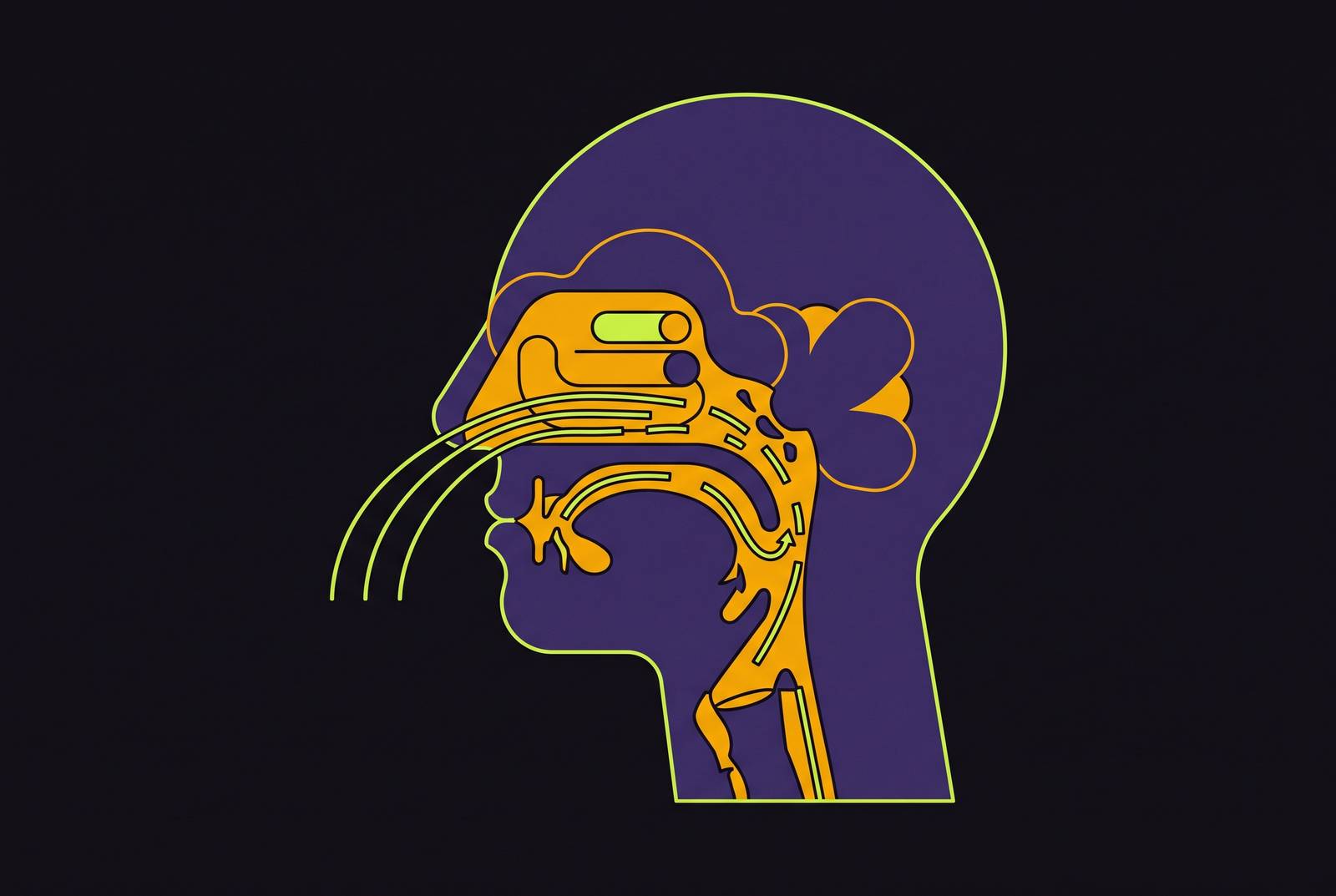
About 81 million people in a large national population carried a seasonal allergic rhinitis diagnosis in 2021, according to a national allergy and asthma advocacy organization: roughly 26% of adults, 19% of kids. Those numbers alone would be worth a headline. But the more consequential figure is: up to 90% of allergic rhinitis patients are untreated, insufficiently treated, or inappropriately treated. That gap doesn't stay contained to a stuffy nose. It reshapes how a person breathes at night, and over months or years, it can set the stage for a sleep disorder most patients have never heard of: upper airway resistance syndrome.
Allergic rhinitis, at its core, is an IgE-mediated inflammatory reaction. Pollen, dust mites, mold spores, or pet dander hit the nasal lining, and the immune system overreacts, causing congestion, runny nose, sneezing, itching. Seasonal allergic rhinitis flares with pollen counts and eases off. Perennial allergic rhinitis, driven mostly by dust mites and mold, doesn't get that break. It sits in the nasal tissue year-round, which matters enormously once you start looking at what happens after the lights go off.
What nasal congestion does to airway mechanics during sleep
The nose isn't just a passage air moves through. It filters, humidifies, and warms incoming air, and it also sets resistance for everything downstream in the airway. A clear nose means an easier path. A swollen one changes the whole mechanical setup, not just the sniffle.
Allergic inflammation swells the mucosal lining, affects the turbinates (the ridged structures inside the nose that regulate airflow), and builds up mucus. All three of these narrow the passage and raise nasal resistance. Once resistance climbs, the body compensates: mouth breathing kicks in, breathing effort increases, and the whole rhythm of respiration shifts.
Lying down makes it worse. Lying flat shifts fluid dynamics in the nasal tissue in ways that can worsen congestion beyond whatever allergen exposure has already caused. So a patient who manages fine at a desk all day can find themselves fighting for air within minutes of lying flat.
The mechanism works like this. The upper airway, from the nasal passage through the throat, is a collapsible tube, not a rigid pipe. As nasal resistance rises, the body has to generate more negative pressure inside that tube to pull air through on each breath. That negative pressure doesn't just move air, it also pulls inward on the soft tissue walls of the throat. More resistance up front means more suction downstream, and more suction means more collapse pressure on tissue that was never built to withstand it.
This is the chain that matters: not a blocked airway, not an apnea, but a chronic state of elevated resistance that turns ordinary breathing into effortful, fragmented breathing. Research on rhinitis and sleep has tied nasal inflammation to microarousals and fragmented sleep architecture even in patients who don't meet formal apnea criteria. And when nasal inflammation gets treated, sleep quality and related daytime symptoms have been shown to improve. The improvement in sleep quality and daytime fatigue when nasal inflammation is treated confirms the mechanism.
What upper airway resistance syndrome is and why it sits between snoring and sleep apnea
UARS was first described in the early 1990s, though the pattern had been recognized in children as far back as 1982. The syndrome was named to explain patients who were clearly sleepy and clearly sleep-disrupted, but who didn't hit the diagnostic bar for obstructive sleep apnea (OSA).
UARS doesn't require apneas (full breathing stops) or hypopneas (partial ones), which is its defining feature. It's defined by increased resistance to airflow that triggers repeated micro-arousals, brief enough that the patient almost never feels themselves waking up. The apnea-hypopnea index (AHI), the number every standard sleep study reports, can come back completely normal in someone with UARS. That single fact explains a lot of missed diagnoses.
Think of it as a spectrum: primary snoring on one end, obstructive sleep apnea on the other, and UARS occupying the middle ground. What separates these conditions isn't the symptom, it's the degree of airway collapse and how the body responds to it.
That same NCBI Bookshelf review states the physical setup behind UARS often includes retrognathia (a recessed lower jaw), a narrow nasal passage, or lower muscle tone in the throat. UARS shows more in younger, leaner people, exactly the population a clinician might not think to screen for a sleep breathing disorder. Craniofacial anatomy plays a heavier role here, which is precisely why nasal obstruction from allergies becomes such a significant, modifiable risk factor. You can't easily change someone's jaw structure. You can treat their nasal inflammation.
The NCBI review states that, left alone, prolonged airflow limitation during sleep has been linked to measurable cognitive impact, and untreated UARS carries associations with reduced quality of life, ongoing fatigue, insomnia, and depressive mood. Nasal blockage and nasal allergies are named directly in the clinical literature as established risk factors for developing the syndrome.
How allergic rhinitis specifically creates conditions for UARS to develop
Two mechanisms run in parallel here, and they reinforce each other rather than working independently. The first is structural: mucosal swelling and turbinate enlargement physically narrow the nasal passage. The second is positional: lying down at night amplifies that congestion through vascular pooling. Combining them means nighttime breathing has to work against far more resistance than daytime breathing ever did.
Both pathways drive the same downstream problem: more negative pressure required to pull air past the blockage, and more negative pressure pulling on the pharyngeal walls. That's the resistance event that defines UARS, repeated dozens or hundreds of times a night.
Which allergic rhinitis symptom matters most here? A large European survey (the GA²LEN survey) found nasal obstruction, not sneezing, not a runny nose, was the symptom most strongly tied to poor sleep quality. That's a useful detail for anyone trying to self-assess. Sneezing fits are annoying. A blocked nose at 2 a.m. is a mechanical problem.
Perennial allergens (dust mites, mold) turn this into a year-round issue rather than a seasonal one, since the inflammation never fully resolves. Seasonal pollen, on the other hand, can trigger acute, UARS-like episodes even in people who don't otherwise have chronic nasal issues, purely during peak pollen weeks.
Putting those two facts together reveals a clinical pattern in the patient's presentation. A patient shows up complaining of unrefreshing sleep, daytime fatigue, morning headaches. A sleep study comes back with a normal AHI. Does that rule out a sleep breathing disorder? Not necessarily, and that's exactly the trap. The patient may have UARS, driven by allergic rhinitis nobody adequately treated, and a sleep study measuring only one breathing metric is built to miss it. Treating the underlying nasal allergy is described in the allergy literature as a central approach to managing UARS, not a nice-to-have. Allergic rhinitis is a treatable cause of UARS. It's a treatable cause of it.
The daytime symptom burden: fatigue, brain fog, and mood effects that look like something else
Allergic rhinitis and UARS each produce daytime symptoms on their own. Layered together, the burden doesn't just add, it compounds.
Fatigue sits at the center of the UARS complaint. Patients report sleeping a full night and waking up wrecked anyway, which lines up with the sleep fragmentation documented in rhinitis patients even when they never cross the line into formal UARS.
The cognitive piece is where this gets more interesting, and slightly more contested. A study published in PMC links allergic rhinitis to measurable effects: memory decline, attention problems, weaker school performance, anxiety, depression. Ragweed season specifically has been shown to hit working memory in allergic patients. A newer PMC study (dated 2026) points to something more mechanistic: gamma brain activity tied to cognitive processing gets modulated by breathing rhythm itself, and nasal blockage, or disruption to the olfactory bulb, weakens that synchronization. That's a direct neurological consequence of a blocked nose, separate entirely from however badly the patient slept the night before.
Not every study agrees on how severe this is. An older paper (PMID 12220469) found allergic rhinitis patients perceived cognitive impairment without showing significant deficits on objective testing. One read on that gap: patients might compensate well enough during a test to mask fatigue that appears everywhere else in daily life. This is a developing area of research, not settled fact, so it should be treated that way rather than overstating certainty either direction.
There's also a systemic angle. Inflammatory cytokines released during an allergic reaction don't stay local, they circulate. Research has found these circulating cytokines may impair attention span and slow processing speed. And mood tracks right alongside: UARS on its own carries links to depressive mood and insomnia, and allergic rhinitis's own clinical complications include anxiety and depression.
Fatigue, brain fog, low mood, poor focus: these get chalked up to stress, to depression, to bad sleep hygiene, constantly. The allergy-to-airway pathway deserves a spot on that differential list, because right now it rarely gets one.
Why this combination is so often missed and misdiagnosed
Most sleep labs report one number: the AHI. That number can look perfectly normal in a UARS patient. Catching the syndrome requires a clinician to specifically look for respiratory effort-related arousals (RERAs), which usually means esophageal manometry or a RERA-sensitive scoring approach that standard sleep studies don't run by default (per that NCBI Bookshelf review and separate clinical sources on UARS diagnosis).
Allergic rhinitis gets missed for a different reason. Patients walk into a doctor's office describing the downstream complaint, fatigue, bad sleep, brain fog, not the upstream cause sitting in their nose. Given that up to 90% of AR patients are undertreated to begin with, plenty of them have never had a formal allergy workup.
Putting the two gaps together produces a diagnostic dead end. The sleep specialist sees a clean AHI and sends the patient home. The primary care doctor treats it as insomnia, or depression, or just tells the patient to sleep more. The allergist never enters the conversation, because nobody referred the patient there.
What happens to these patients in the meantime? Years, sometimes, of antihistamines and sleep aids, medications that blunt individual symptoms without touching the nasal inflammation or restoring normal airflow. Antihistamines carry their own complication here too: some sedate, which can mask the underlying sleep disruption rather than fix it, and some dry out mucous membranes without doing anything for the swollen turbinate tissue causing the actual obstruction.
Diagnosing UARS starts with a clinician who already knows the syndrome exists, since it's not a checkbox on a standard sleep report. Patients who suspect this pattern in themselves have real reason to bring up their allergy history directly with a sleep medicine provider, rather than assuming it'll come up on its own. Younger, leaner patients are least likely to fit anyone's mental image of a sleep apnea case, which compounds how easily this pattern goes unrecognized.
How treating the allergic rhinitis changes the airway resistance picture
Treating nasal allergies aggressively is named in the clinical literature as a central treatment approach for UARS, not a secondary measure.
Research on rhinitis and sleep backs this up directly: reducing nasal inflammation has been shown to improve both sleep quality and daytime fatigue. That's the clearest evidence available that the allergic rhinitis to UARS chain runs in reverse too. Treating the upstream cause eases the downstream resistance.
Other UARS treatments work on anatomy rather than immunology. Palatal surgery, orthognathic surgery, dental devices, these address the physical structure of the airway rather than the allergic immune response driving the swelling. Treating the allergic rhinitis is the one approach aimed squarely at the inflammatory root.
Here is what each option actually targets:
- Nasal corticosteroid sprays and antihistamines cut inflammation and ease symptoms in the moment, but the relief lasts only as long as the medication does. Nothing about them retrains the immune system.
- CPAP and dental devices manage airway mechanics directly, holding the airway open by force or repositioning the jaw, without doing anything about the nasal inflammation causing resistance upstream.
- Allergen immunotherapy works differently: it modifies the underlying immune response itself, reducing the mucosal inflammation at the source rather than papering over it.
Why does that distinction matter specifically for UARS? Because the condition is driven by dynamic, inflammation-based resistance, not a fixed structural narrowing that surgery would need to correct. Reduce the inflammation, and the resistance drops with it. That makes immunotherapy a logical target, not a guaranteed cure for UARS on its own, but a well-supported, first-line rationale for treating the allergic root of the chain before reaching for tools that only manage the mechanics downstream.
What the evidence says about sublingual immunotherapy as a disease-modifying option for allergic rhinitis
Symptom medications treat what's happening right now. Immunotherapy, whether given as injections or under the tongue (sublingual immunotherapy, or SLIT), aims at the underlying disease process itself. A 2022 review in PubMed found both delivery methods produce long-term clinical benefit that persists after treatment stops, a genuinely different category of outcome than anything an antihistamine offers.
The evidence base for SLIT specifically has grown substantial. A re-appraisal published in the European Archives of Oto-Rhino-Laryngology (issue 283, 2026) pulled together 20 separate systematic reviews and meta-analyses on SLIT for allergic rhinitis, searching PubMed, Embase, the Cochrane Library, Web of Science, and several Chinese medical databases through June 2025. The conclusion: SLIT shows favorable results for both symptom scores and medication use, with safety profiles researchers describe as generally acceptable.
A separate narrative review in Frontiers in Allergy (Paoletti and colleagues, 2026) pulled together randomized controlled trials, real-world patient cohorts, and existing meta-analyses. It found strong support from controlled trials for meaningful symptom reduction and lower medication use from grass and house dust mite SLIT tablets specifically, with benefits still measurable one to two years after patients completed a three-year treatment course in the key trials reviewed. Real-world cohort data added another finding: reduced risk of new asthma onset among treated patients.
Pediatric data holds up too. The SQ house dust mite SLIT tablet, tested in children with allergic rhinitis in the MT-12 trial and published in Lancet Regional Health Europe (2025, volume 48), showed effectiveness in that population. A separate phase III trial of the SQ tree SLIT tablet in children, published in Allergy (2025, 80(3), pages 795 to 806), found it effective and well tolerated. Both trials are cited in that Frontiers in Allergy review.
A PubMed review focused on long-term outcomes found that six separate trials showed lasting clinical benefit and measurable immune system changes that persisted after treatment ended, across grass pollen, house dust mite, and Japanese cedar allergen immunotherapy. That's a meaningful signal: the immune system isn't just suppressed temporarily, it appears to shift in a more lasting way.
None of this erases the nuance. Meta-analyses in this space consistently flag heterogeneity between studies, different formulations, different dosing schedules, different patient populations, so product-specific evaluation affects how reliably results generalize, unlike blanket claims. But the overall direction of the evidence is hard to miss: SLIT doesn't just quiet symptoms for a season. It offers a route to changing the underlying disease that starts the entire chain, from swollen nasal tissue, to nighttime airway resistance, to the fatigue and fog that so often get blamed on everything except the nose.
Sources
- Efficacy and safety of Sublingual immunotherapy for allergic rhinitis: an overview of systematic reviews and meta analyses | European Archives of Oto-Rhino-Laryngology | Springer Nature Link
- Frontiers | Sublingual allergen immunotherapy: evidence from randomized trials, real-world studies and meta-analyses
- Upper Airway Resistance Syndrome
- Long-term efficacy of the sublingual and subcutaneous routes in allergen immunotherapy - PubMed
- ncbi.nlm.nih.gov
- ncbi.nlm.nih.gov
- ncbi.nlm.nih.gov
- ncbi.nlm.nih.gov